CARL DJERASSI
FULCRUM / TEATRO, LITERATURA Y PERIODISMO / NÚM. 34"Djerassi delves into the human dimensions of science, addressing personal conflicts, ethical dilemmas, and the societal implications of scientific endeavours."

To say that Carl Djerassi is one of the most prolific scientists ever to have lived on this planet is would be an understatement to the true nature of the kind of human being he was. In addition to his more than 1,200 articles published in specialized journals and having won all the accolades from the American Chemical Society, Djerassi was a brilliantly multi-faceted being: founder of various pharmaceutical companies, owner of the largest collection of works by Swiss modernist painter Paul Klee, author of more than a dozen novels and plays, creator of the Science-in-fiction literary genre, founder and patron of the Djerassi Resident Artist Program, inventor of an orthopedic ski boot, responsible for the most innovative courses at Stanford University, main character in various biographies, autobiographies and one auto-hagiography, responsible for elevating the demographic explosion as a central theme at the Pugwash conferences, and a long etcétera (García Olmedo, 2015; Lifshitz, 2015; Alef, 2018).
Carl Djerassi, along with many other Jewish people, arrived in the United States in 1938 fleeing the pre-war environment of his native Austria (born October 19, 1923). One of his earliest remarkable feats was to personally request a scholarship from Eleanor Roosevelt to complete his high school education. After finishing high school, he graduated from Kenyon College and subsequently earned his doctorate from the University of Wisconsin, focusing on the emerging field of steroids.
His first position was at CIBA Pharmaceutical Co., where he contributed to the synthesis of the antihistamine steroid piribenzamine. However, his ambition to excel in this field led him to Mexico City in 1945, where he joined Syntex, a small and relatively unknown Mexican company specializing in the synthesizing of pharmacologically relevant products from native natural precursors.
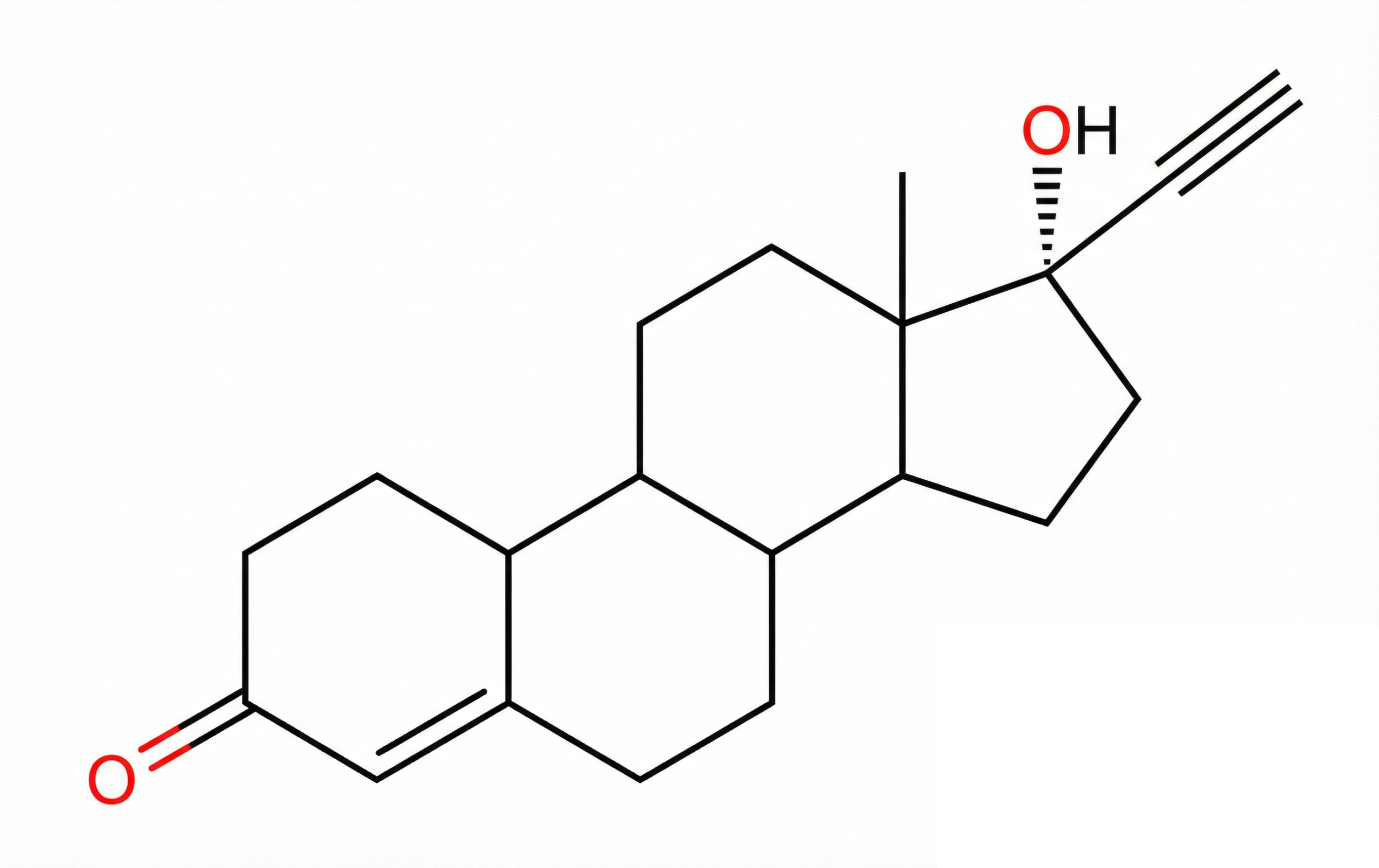
In 1951, he achieved a significant milestone at Syntex by successfully synthesizing another steroid, the cortisone. That same year, he also synthesized the norethindrone, a hormone that, although developed as part of a minor project, would ultimately catapult his status in the field of world chemistry. Norethindrone is a water-soluble, biologically active oral analog of progesterone, which was precisely what was required as the active ingredient for the contraceptive pill. Together with chemists Luis Ernesto Miramontes and Jorge Rosenkranz, he became one of the “fathers of the pill.” (García Olmedo, 2015)
The Societal Impact of Science
The production and industrialization of the pill serve as a compelling illustration of how certain scientific achievements can profoundly influence society. The pill transformed the social fabric of the Western world, enabling women to access opportunities for development that had been historically denied to them for centuries (García Olmedo, 2015). As a result of birth control, society began to move toward a more equitable and just relationship between genders, which in turn facilitated the advancement of women (see Djerassi, 1979; Djerassi, 1994).
At the age of twenty-eight, Djerassi made a significant impact on the field of steroids. However, as he himself noted, he aspired to be more than a single-phase individual. This ambition led him to embark on a seemingly dubious venture: literary creation, which he pursued at the age of sixty-one (García Olmedo, 2015).
Rumour has it that this literary rebirth was catalysed by the departure of his lover for another man. “It was May 8, 1983”, Djerassi recalls, “I, who had never composed a poem or written a single word of fiction, decided to take revenge on that poet and literature professor on her own ground” (García Olmedo, 2015). This poet was Diane Wood Middlebrook, a distinguished academic known for her acclaimed biography of the feminist writer Sylvia Plath. She returned to Djerassi just in time to prevent the publication of some sentimental poems of questionable merit and a novel that alleged “a terrible lapse of judgment in love committed by an elegant feminist” (García Olmedo, 2015).
Establishing "Science-in-fiction"
Despite this episode, Djerassi’s enthusiasm for literary creation only intensified, ultimately resulting in five novels, including his notable tetralogy, Cantor’s Dilemma (Djerassi, 1989), The Bourbaki Gambit (Djerassi, 1994), Marx, Deceased. A Novel (1996), and Menchem’s Seed (1997). Additionally, he produced a collection of poems —the aforementioned work of questionable merit—, two collections of short stories, eight plays —several of which premiered on Broadway— and nine essays.
However, the most significant aspect of his literary universe is undoubtedly the establishment of a peculiar genre: Science-in-fiction. He pioneered this genre to integrate elements of scientific culture into the awareness of audiences with limited scientific backgrounds, utilizing authentic research narratives as a foundation rather than relying on speculative futures or improbable scientific advancements (Álef, 2018). Through his writings, Djerassi delves into the human dimensions of science, addressing personal conflicts, ethical dilemmas, and the societal implications of scientific endeavours. His work aims to render the realities of scientific pursuits more accessible, thereby enhancing understanding and appreciation for science among a broader audience.
For example, in his first novel, Cantor’s Dilemma (Djerassi, 1989), Djerassi recreates the fierce competition within the highest echelons of the scientific community for recognition (including the Nobel Prize) and how the human condition leads us to make unforgivable blunders. In the following extract, Jerry Stafford, assistant to Professor Isidore Cantor, tries to confess that he falsified the results of the experiment for which they have now been awarded the Nobel Prize in Medicine:
“Professor”. Stafford wasn’t up to the informal I. C. “Hold the champagne. I told you that I came to confess something”.
“And I responded that this time was not for confessions”, Cantor said dryly. “I’m not prepared to assume the role of confessor. Enough of that”. He reached the bottle, but Stafford put his hand forward.
“Please, I. C.” —the pain was clear in his voice— “listen. I can’t accept the Nobel Prize”.
Cantor’s mouth opened, but no sound came out.
“I. C.,”Stafford rushed on “I don’t deserve it. You know that as well as I do”.
“Jerry!” Cantor’s tone was peremptory. “The Nobel Prize was awarded for what we published in Nature. We, Jerry: Cantor and Stafford, let’s not second-guess the Swedes”.
“But I. C.! That’s what I have to talk to you about. The first experiment —the one we published together”.
The Bourbaki Gambit and Oxygen
In his second novel, The Bourbaki Gambit (Djerassi, 1994), Djerassi (once again) addresses the struggle for recognition, the informal organization of the scientific community, and the aging of scientists that characterized certain epochs. The plot revolves around two important events: the discovery of the polymerase chain reaction (PCR) and the French group of mathematicians known as Nicolás Bourbaki. While the PCR was one of the most reliable tests for COVID during the last pandemic, Nicolás Bourbaki was the name of a group of French mathematicians who, in the 1930s, published important works in a wide variety of areas of mathematics under this pseudonym. In the collective imaginary of the founding members—Cartan, Chevalley, Coulomb, Delsarte, Dieudonné, Ehresmann, de Possel, Mandelbrojt, and Weil—Nicolas Bourbaki was a Poldavian mathematician capable of surprising more than one person in more than one area of mathematics.
Another interesting example is the play Oxygen (co-written with Roald Hoffman, Nobel Prize winner in Chemistry in 1981) (Djerassi, 2012). For this work, Djerassi and Hoffman chose a very sexy subject for the scientific community: the Nobel Prize. In Oxygen (written in 2001, the centenary of the first Nobel Prize awarding), the play raises the possibility that the Nobel Foundation might decide to celebrate the centenary by establishing a new Nobel Prize, “The Retrospective Nobel Prize”, honoring work done before 1901, the year in which the first awards were given (Djerassi, 2012; Djerassi & Hoffman, 2001).
In addition to the dramatic narration of the discovery of oxygen, the play grapples with two fundamental questions: What does discovery mean in science, and why is it so important for a scientist to be the first? The authors bring us closer to these questions through dialogues steeped in scientific realities rather than speculation. For example, in this fictional meeting of the Nobel Retrospective Committee, Astrid Rosenqvist, the committee chair, discusses with her colleagues, first, the selection of the discovery that deserves the honor and, then, to which scientist it should be attributed:
Astrid Rosenqvist: First to the discovery: no one will question that oxygen confers great benefit on mankind, right?
Bengt Hjalmarsson: Oxygen was good for people before it was “discovered!”
Ulf Svanholm: But there are plenty of benefits that are required for oxygen to be isolated. What about the emphysema victim in an oxygen tent? … the Everest climber with his oxygen bottles? … the astronaut in the space suit?
Sune Kallstenius: We didn’t pick oxygen for its value to mountain climbers or astronauts or sick people.
The Final Legacy
Due to a family tragedy (the suicide of his daughter Pam, a poet and painter), and as a tribute, Djerassi and his future third wife, the aforementioned Diane Wood Middlebrook, founded in the early 1960s the Djerassi Resident Artists Program in Santa Cruz, California. Its first resident was sculptor Tamara Rikman, and since then, the foundation has awarded more than 2,300 residencies to artists from 54 different countries, including writers, playwrights, visual artists, musicians, and… scientists! (Djerassi Resident Artist Program, 2025).
At the beginning of this article, I highlighted Carl Djerassi’s surprising ability to replicate himself and excel in places that are unusual for a scientist. For example, he wrote an auto-hagiography! Paraphrasing James D. Watson, one of the authors of DNA’s double helix model, “[...] no one ever surprised Djerassi in a modest attitude” (García Olmedo, 2015). Watson continues, “I have never known anyone so self-absorbed and with such an oversized ego” [1]. Or as Djerassi himself admitted, “We are all driven by ego. Many pretend otherwise. I am just honest and admit it” (García Olmedo, 2015).
So perhaps we are still missing one last piece of the puzzle about this multi-faceted scientist, who also had time to seek out unique pieces of silk in the markets of Asia, then commissioned exotic, sur mesure garments to wear at opera galas and art openings of the time. Carl Djerassi died on January 30, 2015, in San Francisco, California, at the age of ninety-one.
K. M. García-Ruiz